Kiwi Auto Wrecker is a Ford Ranger wrecker Christchurch. Car owners can call them to sell a Ford Ranger. Maybe your ute is tired and worn out. Maybe it was in a crash. It may not start at all. It may have also failed the WOF. Ford Rangers are often needed for parts and salvage in New Zealand. So even a Ranger that cannot be driven can still have value. Kiwi Auto Wrecker will inspect the vehicle first. After that, they set up the pickup.
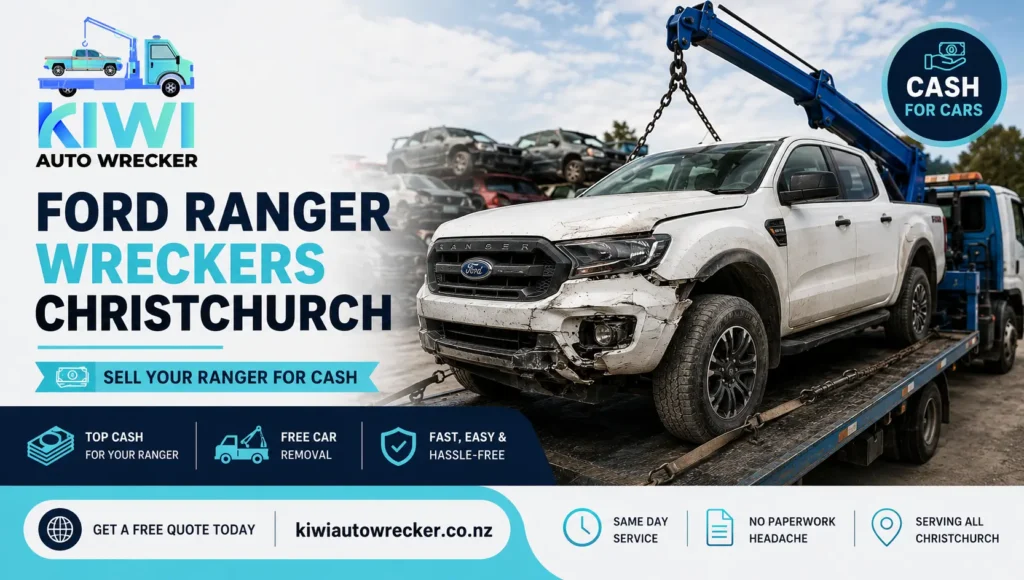
If you have a Ranger sitting at home and you think it is not worth fixing, keep reading. Below is how the price is worked out. You will also see how damaged and non-running utes are handled. This is the same sale process in Christchurch and around Canterbury.
Can I Sell My Ford Ranger to a Wrecker in Christchurch?
Kiwi Auto Wrecker takes Ford Rangers from people around Christchurch and Canterbury. They do this even if the ute is old, has high mileage, or is not in great shape. Some get picked up after a crash. Others have mechanical issues. And some just will not start at all.
A wrecker does not judge a Ranger the same way a private buyer does. A private buyer may ask one simple question: will it drive today? A wrecker looks at other things, like these:
- how the engine and gearbox run
- how the drivetrain holds up
- which parts can be reused, such as panels and the inside pieces
- how much the Ford Ranger parts are wanted in the area
- what it will cost and take to take the car off your place
So a Ranger that is hard to sell on your own can still be worth something for a wrecking firm.
How Much Is a Ford Ranger Worth as a Wrecking Vehicle?
A Ford Ranger’s wrecking value depends on its specific condition, model, and parts demand, so it’s assessed individually rather than priced off a generic scale. Wrecking value is not the same as private-sale or retail market value.
A Ranger heading to a wrecker is typically valued on:
- What components can realistically be reused or resold
- The condition of major mechanical parts like the engine and gearbox
- How complete the vehicle is
- Current demand for that generation of Ranger parts
Because every vehicle is different, an accurate figure only comes from having the Ranger assessed directly rather than estimated over the phone from a description alone.
What Affects the Value of a Ford Ranger?
Several factors combine to determine what a Ford Ranger is worth as a wrecking vehicle. No single factor decides the outcome on its own.
Ranger Model and Variant
Ford Ranger has been sold in New Zealand across multiple generations, body styles, and trim levels, including single cab, extra cab, and double cab configurations, plus dedicated work and fleet models. Parts demand can vary between these variants, which affects value.
Condition
Overall body and mechanical condition play a major role. A Ranger that’s been well maintained, even if it no longer runs, generally offers more reusable value than one that’s heavily corroded or has extensive prior damage.
Engine and Gearbox
The engine and gearbox are often the most valuable components on a ute like the Ranger. Their condition, whether working, faulty, or completely failed, has a significant effect on overall value.
Mileage
High-mileage Rangers can still hold value, particularly for parts unrelated to the drivetrain, but mileage does factor into how a wrecker assesses mechanical components.
2WD vs 4WD
Drivetrain configuration matters because 4WD components such as transfer cases and differentials are assessed separately from 2WD parts, and demand differs between the two.
Complete vs Missing Parts
A complete Ranger is generally easier to value accurately. Missing panels, wheels, or interior components can reduce overall value, since the vehicle offers fewer usable parts.
Demand for Ranger Parts
Ford Ranger is one of the most common utes on New Zealand roads, which tends to support ongoing demand for used and salvage parts, but demand can still shift depending on the specific component and model year.
Can I Sell an Accident-Damaged Ford Ranger?
Yes, an accident-damaged Ford Ranger can still be sold to Kiwi Auto Wrecker. Crash damage doesn’t automatically mean the vehicle has no value, because many components away from the point of impact may remain fully reusable.
Common types of accident damage that don’t rule out a sale include:
- Front-end damage, including bumper, bonnet, or headlight damage
- Rear-end damage such as tailgate or taillight damage
- Side or body panel damage
- Suspension damage from an impact
- Underlying mechanical damage caused by the crash
If your Ranger was written off by an insurer, check how they handle salvage cars before you sell it. The way they manage it can change what paperwork you need and who ends up owning the vehicle.
Whether you should fix the damage or sell the Ranger after the crash often depends on repair costs. You also need to look at the current condition of the ute and what it is worth. Many people, especially owners with older or high-mileage utes, find it easier to sell it to a wrecker instead of paying for major repairs.
Can I Sell a Non-Running Ford Ranger?
Yes, a Ford Ranger does not need to start or drive to be sold to Kiwi Auto Wrecker. Non-running vehicles are a normal part of what a car wrecker deals with.
Reasons a Ranger might be non-running include:
- Engine failure or a blown engine
- Gearbox or transmission failure
- Electrical faults
- A flat or dead battery
- Long-term parking without use
- General mechanical faults that make the vehicle unsafe to drive
If your Ranger can’t be safely driven, it shouldn’t be taken onto public roads. Vehicle removal is the practical option here, allowing the ute to be assessed and collected directly from your property rather than requiring you to get it running first.
Which Ford Ranger Parts Can Have Salvage Value?
A Ford Ranger has parts that can still be sold for money. Even if the truck is not road-safe and will not run, some pieces may keep value. That is why people still buy damaged or non-running Rangers. They do it to take the useful parts and resell them.
Parts commonly considered for reuse or resale include:
- Engine and engine components
- Gearbox/transmission
- Differential and transfer case
- Doors, bonnet, and guards/fenders
- Tailgate
- Headlights and taillights
- Mirrors
- Wheels and tyres in usable condition
- Suspension components
- Steering components
- Seats and interior components
- Electrical components and wiring
- Body panels
The actual value of any individual part depends on its condition, whether it’s compatible with current-generation Rangers, ongoing demand, and how readily similar used parts are already available in the market. This is why an assessment of your specific Ranger is more reliable than a general estimate.
Can I Sell a Ranger With Engine or Gearbox Problems?
Yes, a Ford Ranger with engine or gearbox problems can still be sold. These issues affect how the vehicle is valued, but they don’t prevent a sale.
Common engine and gearbox issues owners raise include:
- Engine overheating or head gasket failure
- Complete engine failure
- Gearbox slipping or failing to shift
- Transmission failure, particularly on higher-mileage utes
- Turbo or diesel-specific mechanical faults
Even when the engine or gearbox itself has failed, other systems on the Ranger, such as the body, suspension, electrical components, and interior, may still be in good working order and hold separate value.
Can I Sell a Ranger With a Failed WOF or Registration Issues?
Yes, a Ford Ranger that has failed its WOF can still be sold to a wrecker. A failed WOF affects whether a vehicle can legally be driven on public roads, but it does not affect your ability to sell or dispose of it.
A few important distinctions:
- Ownership is separate from roadworthiness. You can own and sell a vehicle regardless of its WOF status.
- Driving on public roads requires a valid WOF and registration. A vehicle that has failed its WOF should not be driven until repaired or arranged for removal.
- Deregistration is a separate process. Owners should refer to official Waka Kotahi NZTA guidance for current requirements around registration and deregistration when disposing of a vehicle.
Because rules around registration and deregistration can change, it’s worth checking the current requirements directly with Waka Kotahi NZTA rather than relying on general advice.
How Does Selling Your Ford Ranger to Kiwi Auto Wrecker Work?
Selling a Ford Ranger to Kiwi Auto Wrecker generally follows a straightforward process, from initial contact through to vehicle removal and paperwork.
- Contact us with details about your Ranger, including its condition and any known faults or damage.
- Provide Ranger details, such as the model, year, drivetrain, mileage, and whether it currently runs or has been in an accident. The more accurate this information is, the more useful the initial assessment will be.
- Arrange a vehicle assessment and quote, based on the details provided and the vehicle’s actual condition.
- Arrange vehicle removal, particularly important if the Ranger is non-running or unsafe to drive.
- Complete the sale, including relevant paperwork and any applicable NZTA steps around ownership transfer or deregistration.
Having clear details ready, such as photos, an idea of the fault, and any accident history, can help Kiwi Auto Wrecker provide a more accurate picture of your Ranger’s value before proceeding.
Why Sell a Damaged Ranger to a Wrecker Instead of Privately?
Selling a damaged or non-running Ranger to a wrecker is often more straightforward than a private sale, mainly because it removes the need for repairs, inspections, and buyer negotiations. That said, the best option depends on your vehicle’s condition and your own priorities.
Private sale generally involves:
- Repairing the vehicle to a sellable, driveable standard
- Arranging and paying for a WOF if required
- Listing the vehicle and fielding buyer enquiries
- Negotiating price, often with buyers wary of damage or mechanical issues
- Organising a way for the buyer to inspect and collect the vehicle
Selling to a wrecker generally involves:
- No requirement for the vehicle to be running or roadworthy
- No need for repairs beforehand
- A single point of contact for assessment and removal
- Vehicle removal handled directly, rather than the owner arranging transport
For a Ranger that’s damaged, non-running, or simply old and unwanted, avoiding the time and cost of repairs is often the deciding factor. For a vehicle in good working condition, a private sale may still return more depending on the buyer market at the time.
Frequently Asked Questions
Yes. A Ranger doesn’t need to start or drive to be sold to Kiwi Auto Wrecker. Non-running vehicles can be assessed and removed directly from your property.
Yes. Accident damage doesn’t automatically remove a Ranger’s value, since many parts away from the damage may still be reusable.
It depends on the model, condition, mileage, drivetrain, and parts demand at the time. An individual assessment gives the most accurate picture.
Often, yes. Ford Ranger is a widely used ute in New Zealand, so parts demand can remain strong even for older or high-mileage models.
Yes. Engine issues affect how the vehicle is valued, but other components, such as the body, interior, and electrical parts, may still hold value.
Yes. A faulty or failed gearbox doesn’t prevent a sale, since the rest of the vehicle can still be assessed for salvage value.
Yes. Vehicle removal is arranged directly, which is the practical option for Rangers that are unsafe or unable to be driven.
Details such as the model, year, drivetrain, mileage, running condition, and any accident or mechanical history help provide a more accurate assessment.
Sell Your Ford Ranger to Kiwi Auto Wrecker
Whether you’ve got an old Ranger taking up space, a damaged ute after an accident, a non-running Ranger with engine or gearbox trouble, or simply an unwanted vehicle you want gone, Kiwi Auto Wrecker works with Ford Ranger owners across Christchurch and wider Canterbury to assess vehicles and arrange removal.
Every Ranger is different, and value comes down to its specific condition and parts demand. Getting in touch with the details of your ute is the best way to find out where you stand.