If your car is old, bruised, or kinda not worth repairing anymore, you basically have two real options: sell it to car wreckers Christchurch, or swap it in with a car dealer. Both will give you money and get the vehicle off your hands, but the whole process, the payout, and the paperwork are different, like, very different. This guide tries to show you how each choice works, so you can choose the path that puts the most cash in your pocket with the least annoying steps.
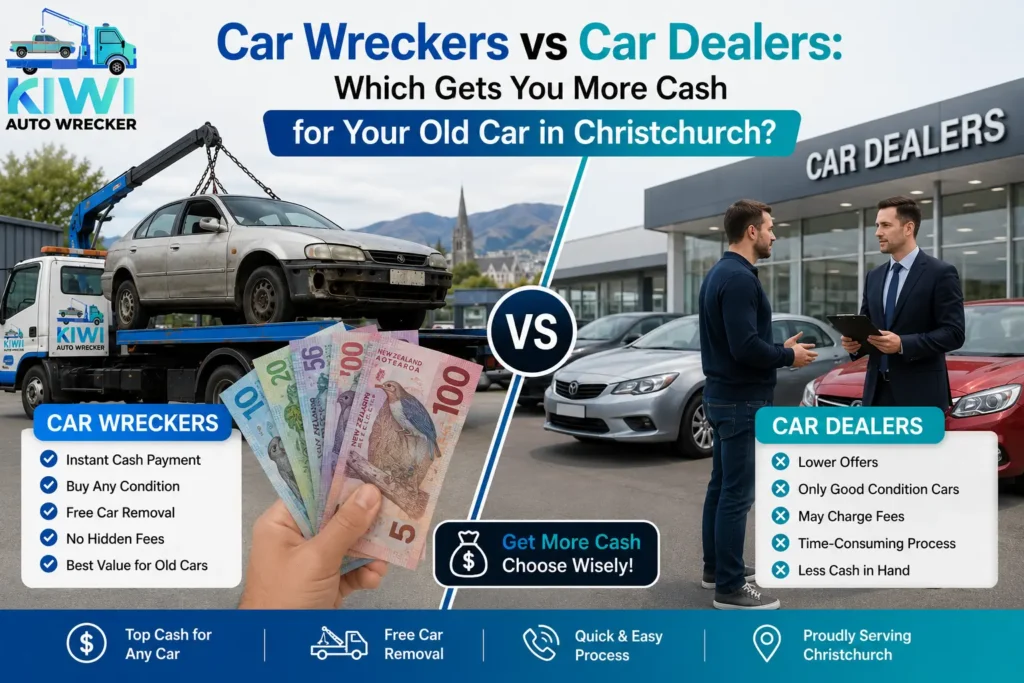
Quick answer: Car wreckers purchase vehicles for their scrap and parts value, often hand you cash on the spot, and they’ll take almost any car no matter what’s going on with it, including damaged, unregistered, or even non-running cars. Car dealers, on the other hand, typically only accept roadworthy vehicles as trade-ins; they usually quote a smaller valuation to cover their resale buffer, and they often link the payout to you buying another vehicle from their lot.
Car Wreckers vs Car Dealers: The Core Difference
A car wrecker (also called a scrap car buyer or auto recycler) purchases vehicles mainly to break them down for parts that are still usable and for recyclable metal, kind of the usable bits. Their business model kind of doesn’t rely on reselling a whole, working car, so they’ll take vehicles that dealers usually won’t even bother with: end-of-life cars, flood- or accident-damaged ones, cars with blown engines, and also vehicles that have effectively failed a WOF permanently.
A car dealer, though, buys or trades in cars they plan to resell as-is, or after some light reconditioning, you know. Their offer mirrors what they can actually move off their lot for, minus their own profit margin, the cost to recondition, and the risk that the car sits there unsold. So that’s why dealer trade-in value is almost always lower than what people think, especially for vehicles older than around 10 years, or if there’s more than 150,000 km on the odometer.
Side-by-Side Comparison
| Factor | Car Wreckers | Car Dealers |
| Accepts damaged/non-running cars | Yes, always | Rarely, or with a heavy discount |
| Payment speed | Same-day cash | Often days, sometimes financed into new purchase |
| Free car removal | Usually included | Not applicable (you drive it in) |
| Valuation basis | Scrap metal + parts value | Resale market value minus margin |
| Requires WOF/rego | No | Usually yes |
| Ties payout to new purchase | No, pure cash sale | Often, especially with trade-ins |
| Paperwork handled for you | Yes, in most reputable services | Partially |
| Best for | Old, damaged, unregistered, unwanted cars | Roadworthy cars in good resale condition |
How Selling to a Car Wrecker Works
- Get a quote. Reputable cash for cars services like KiwiAutoWrecker ask for the make, model, year, and condition, then they provide a valuation over the phone or online, usually within minutes.
- Accept the offer. It’s no obligation, no pressure; you can still contrast it with other scrap car buyers before you decide.
- Book free car removal. A licensed operator comes and collects the vehicle from your driveway, your workplace, or wherever it’s just sitting, even if it won’t start.
- Get paid right away. Cash or a bank transfer is done when they pick it up, not weeks later or after some long delay.
- Deregistration handled. A solid wrecker will take care of the deregistration paperwork, so the vehicle is no longer connected to your name.
This whole thing typically runs in under 24-48 hours from quote to cash, so it’s become the default option for unwanted vehicle removal across New Zealand.
How Selling to a Car Dealer Works
Dealers kind of check a trade-in by looking at wholesale auction info, plus where their current stock sits, and also how fast similar cars have been shifting lately, maybe basically yesterday’s vibe. They typically expect an inspection, then there’s a bit of a back and forth, and if the car needs a WOF or a rego renewal, usually they deduct the cost for that too, no surprise. Also, a lot of dealers want the trade-in to be applied toward buying another vehicle, so you don’t actually leave with cold cash. You leave with a discount on your next car. Which sounds fine, but for a simple used car selling situation where you just want the money, and absolutely nothing else, it can feel slower and more restrictive than a direct sale.
When a Car Wrecker Is the Better Choice
- The car has pretty significant mechanical issues, plus accident damage, or flood damage; it’s just not right.
- It has failed its WOF, and honestly it isn’t worth repairing.
- Or it’s basically end-of-life, with a lot of mileage or nasty rust, and that’s that.
- You want cash today, and not some “later” plan, without needing to buy another car.
- You don’t want the annoying hassle of listing it privately, or the whole thing of driving it somewhere, answering questions, and so on.
When a Car Dealer Might Make Sense
- The car is roadworthy, tidy, and in demand on the used market
- You’re buying another vehicle from the same dealer and want the convenience of one transaction
- You have time to negotiate and aren’t in a rush for cash
Private Sale: The Third Option (and Why Most People Skip It)
Selling privately can, technically, fetch the highest price for a car in excellent condition, but there are real costs too: photographing and listing it, dealing with calls from tyre-kickers, arranging viewings, and waiting sometimes weeks for a genuine buyer. For an older car, scratched up, or just not really worth all the attention, that time cost tends to beat out any extra price. And that’s pretty much the gap car wreckers and cash for cars services slide into, yes.
Industry Trends Worth Knowing in 2026
- Auto recycling is kinda greener than ever. Modern car wreckers recover and recycle up to 80% of a vehicle’s materials steel, aluminium, batteries, and fluids- so landfill waste from end-of-life cars gets cut down.
- Instant online quoting has more or less replaced phone-only valuations. A lot of the more established scrap car buyers now run real-time quote tools, by make, model and condition, which helps the whole car removal thing move faster.
- Parts demand is climbing. With new car prices rising, more owners are doing repairs on older vehicles, and that usually boosts the need for used parts so wreckers can pay more for donor vehicles too.
- Same-day removal feels like the norm now, not this big premium thing. If a company only quotes you after 24-48 hours for pickup, it’s worth checking other car removal companies first.
Tips for Getting the Best Deal
- Get at least 2-3 quotes from different cash for cars services before you settle on one; the price can swing by hundreds of dollars for the same vehicle, kinda wild.
- Be really upfront about damage. Give accurate details about accident history, missing parts, or mechanical faults, because that usually results in a steadier, more dependable quote.
- Also check removal, like is it genuinely free or not. Some operators quietly take out what they call a “collection fee” from the payout, so verify that the number you’re quoted is truly the number you’ll receive, no surprises.
- Make sure they can handle deregistration too. That helps protect you from future fines or liability connected to the car later on.
- And compare to a dealer trade-in only if your car is roadworthy. For anything else, wreckers will nearly always beat what a dealer is willing to offer.
Frequently Asked Questions
It depends on the car’s condition. If it’s damaged, unregistered, or old, a wrecker will almost always pay more and take it faster. If it’s roadworthy and in demand, a dealer trade-in or private sale may net a higher price.
Scrap value depends on the make, model, weight, and current metal and parts prices. Getting a free quote from a local wrecker is the only reliable way to know your car’s actual value.
Yes. Non-running, accident-damaged, and even burnt-out vehicles are standard business for wreckers, since the value comes from parts and metal, not roadworthiness.
No. Reputable cash-for-cars services buy vehicles in any condition, registered or not, and handle deregistration for you.
Most operators, including KiwiAutoWrecker, offer same-day or next-day free car removal once you accept an offer.
Yes, if you’re already buying a replacement car from that dealer and value the convenience of a single transaction over squeezing out the last dollar of value.
It’s dismantled for reusable parts, and the remaining metal is recycled a more environmentally responsible outcome than a car sitting unused or being illegally dumped.
Ready to Compare Your Options?
If your car is just sitting there, unused, damaged, or honestly costing you more to keep than it’s worth, take a free, no-obligation quote from KiwiAutoWrecker before you settle on a dealer trade-in or going with a direct cash sale. In most situations, especially with older vehicles and damaged ones, the cash-for-cars option tends to be quicker, easier to manage, and in general more beneficial.
About the Author
The KiwiAutoWrecker team has years of real-life hands-on know-how in auto recycling and vehicle removal across Canterbury. We help everyday car owners kinda get a grip on the real value of their vehicle, and pick the fastest, fairest way to sell it, be that to a wrecker, to a dealer, or privately too.
KiwiAutoWrecker 📍 Christchurch, New Zealand 📞 022 695 9495